Categories
Commentary

Obliterating lines

[su_row class=””] [su_column size=”3/4″ center=”no” class=””]

Sept. 9, 2019

As a young man, I was asked to sign a letter against the Vietnam War. It did little good.

Now I am asked to sign a letter against racism. It too will do little good.

The only things in this old white man’s life that may have done any good were brewing the coffee for a black community group every week for the last 17 years, and becoming not a visitor but a member of an historically African American church.

That is, crossing the lines that divide us, and crossing them and crossing them and crossing them and crossing them until, one fine day, they fall away and we all live as one.

[/su_column] [su_column size=”1/4″ center=”no” class=””] [/su_column] [/su_row]
Categories
Background

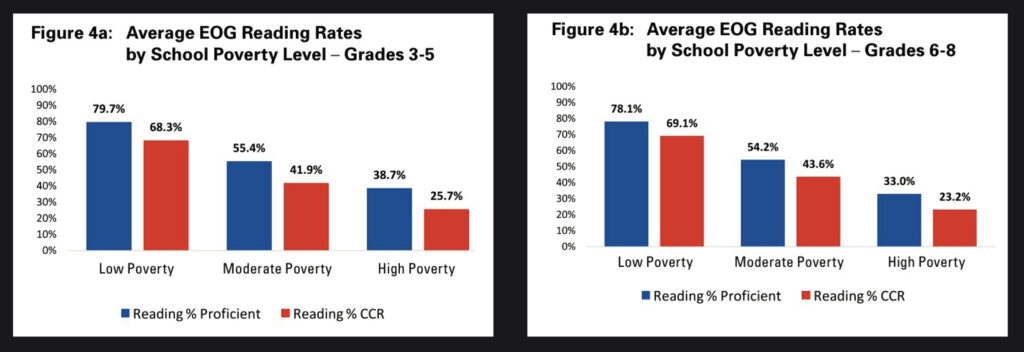
The link between reading proficiency and poverty

From “Breaking the Link”: systemwide reading results from year 2016-2017, percentage of children in grades 3-5 and 6-8 who are reading proficiently (the minimum for being on-grade-level) and CCR (college- and career-ready), with schools categorized in three roughly equivalent-sized groups: low poverty (0%-24%; 57 schools); moderate poverty (25-50%; 57 schools; high poverty (51%+; 56 schools).

April 11, 2018

CMS Supt. Clayton Wilcox directed his staff to prepare a report analyzing all the data available on how school achievement and poverty are intertwined. The community has been tracking this link for decades, but the gaps remain. The issue took on some additional urgency when a 2013 Harvard study ranked the city 50th among 50 big cities studied on the issue of economic mobility. More on the CMS effort is on their website.

CMS prepared data reports in 2018 and 2019. They are available in both English and Spanish.

2018 English 2018 Spanish

2019 English 2019 Spanish

(In July 2019, Wilcox left CMS and by August 2019 had been permanently replaced by Earnest Winston. As of Feb. 16, 2020 no new “Breaking the Link” studies had been released.)

Categories
Background

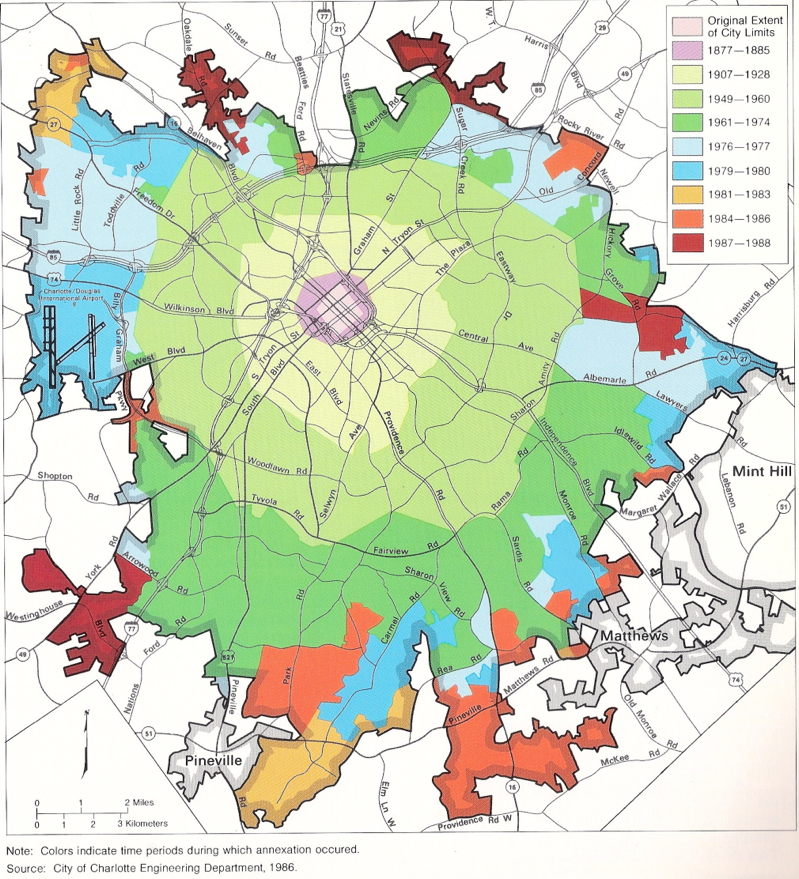
Charlotte annexation through 1988

Source: “Charlotte: Patterns & Trends of a Dynamic City.” Charlotte : Dept. of Geography and Earth Sciences and the Urban Institute at the University of North Carolina, [1992], James W. Clay and Alfred W. Stuart, eds.

Posted March 16, 2013

Categories
Background

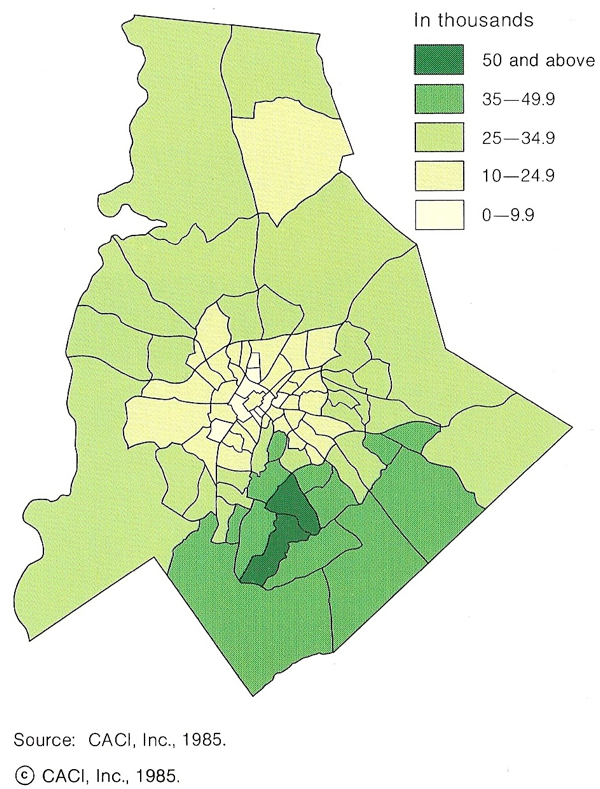
Median household income, 1985, in thousands of dollars

Source: “Charlotte: Patterns & Trends of a Dynamic City.” Charlotte : Dept. of Geography and Earth Sciences and the Urban Institute at the University of North Carolina, [1992], James W. Clay and Alfred W. Stuart, eds.

Posted March 16, 2013

Categories
Background

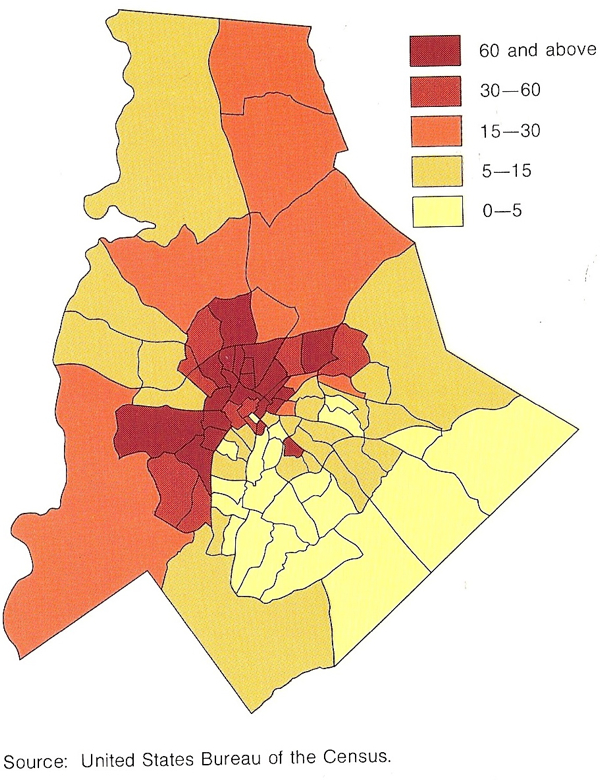
Population, percent black, 1980

Source: “Charlotte: Patterns & Trends of a Dynamic City.” Charlotte : Dept. of Geography and Earth Sciences and the Urban Institute at the University of North Carolina, [1992], James W. Clay and Alfred W. Stuart, eds.

Posted March 16, 2013

Categories
Background

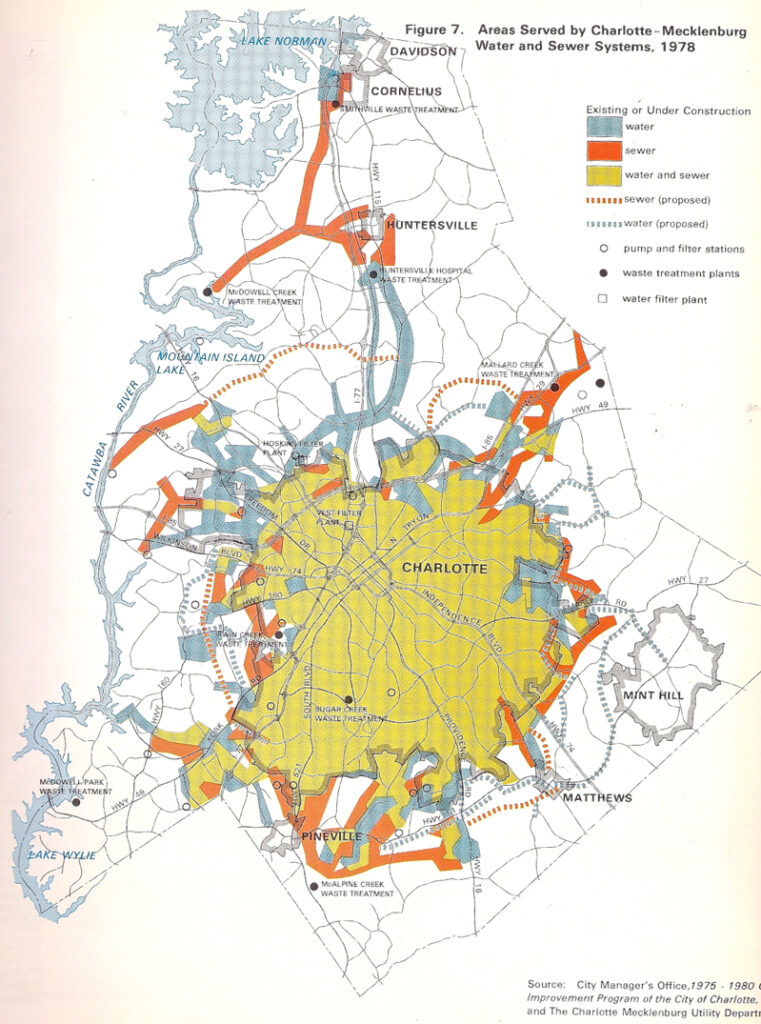
Reach of sewer and water utilities, 1978

Source: “Atlas of Charlotte-Mecklenburg.” James W. Clay, ed.
Charlotte: University of North Carolina at Charlotte, 1981

Posted March 16, 2013

Categories
Background

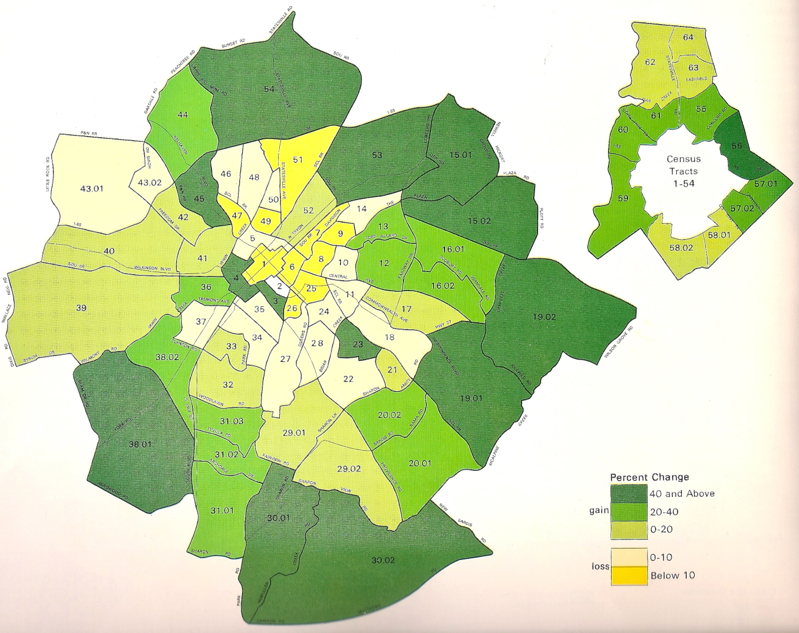
Percent population change, by census tract, 1970-1976

Source: “Atlas of Charlotte-Mecklenburg.” James W. Clay, ed.
Charlotte: University of North Carolina at Charlotte, 1981.

Posted March 16, 2013

Categories
Background

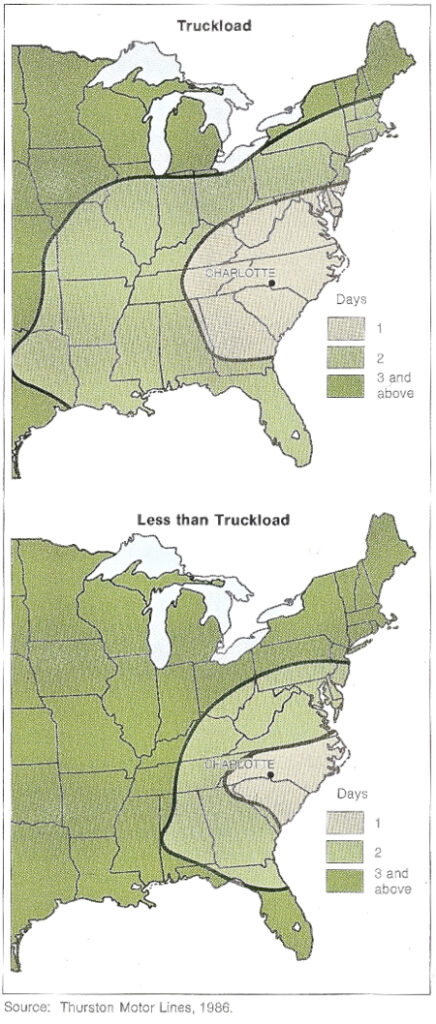
Truck delivery times, 1986

– Source: “Charlotte: an analytical atlas of patterns & trends.” James W. Clay and Alfred W. Stuart, eds. Charlotte : Dept. of Geography and Earth Sciences and the Urban Institute at the University of North Carolina, 1992.

Posted March 16, 2013

Categories
Background

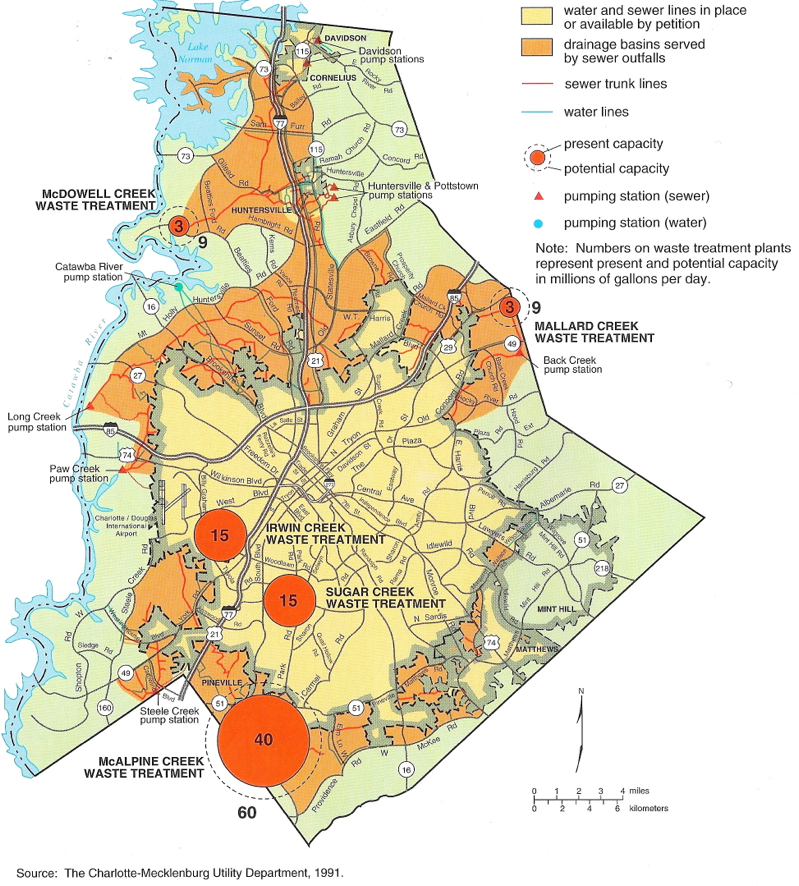
Reach of sewer and water utilities, 1991

Source: “Charlotte: an analytical atlas of patterns & trends.” James W. Clay and Alfred W. Stuart, eds. Charlotte : Dept. of Geography and Earth Sciences and the Urban Institute at the University of North Carolina, 1992.

Posted March 16, 2013

Categories
Background

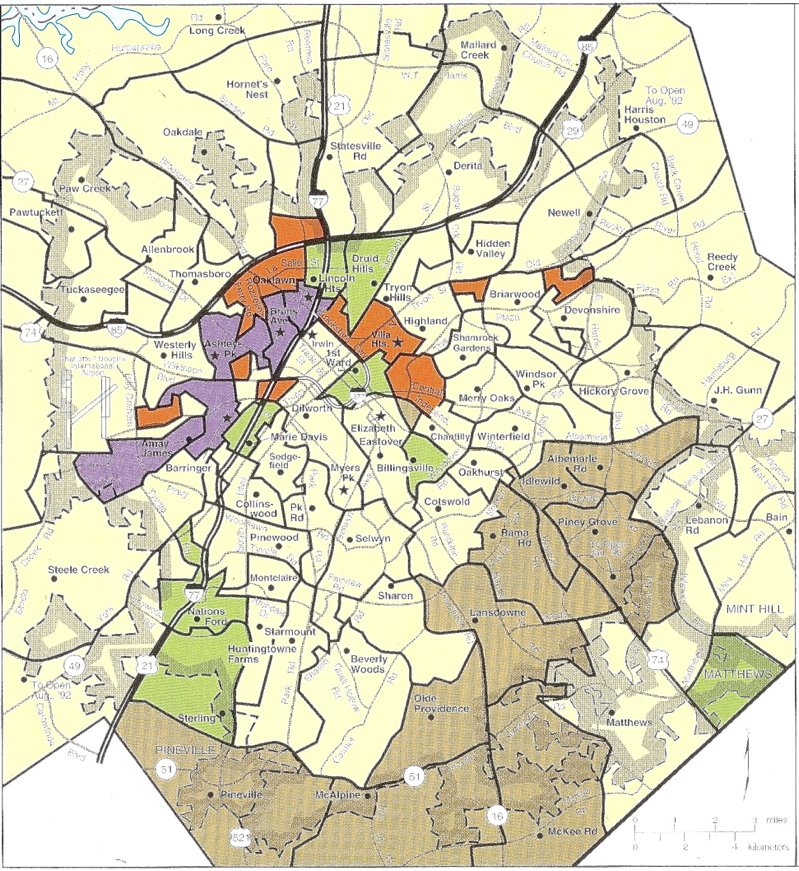
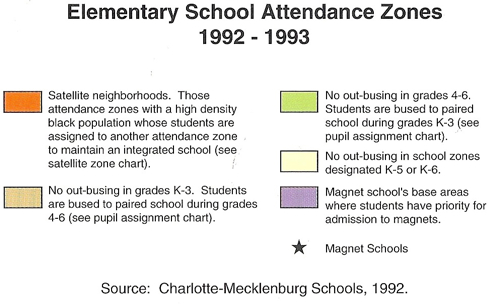
CMS attendance plan, elementaries, 1992-93

Source: “Charlotte: an analytical atlas of patterns & trends.” James W. Clay and Alfred W. Stuart, eds. Charlotte : Dept. of Geography and Earth Sciences and the Urban Institute at the University of North Carolina, 1992.

Posted March 16, 2013